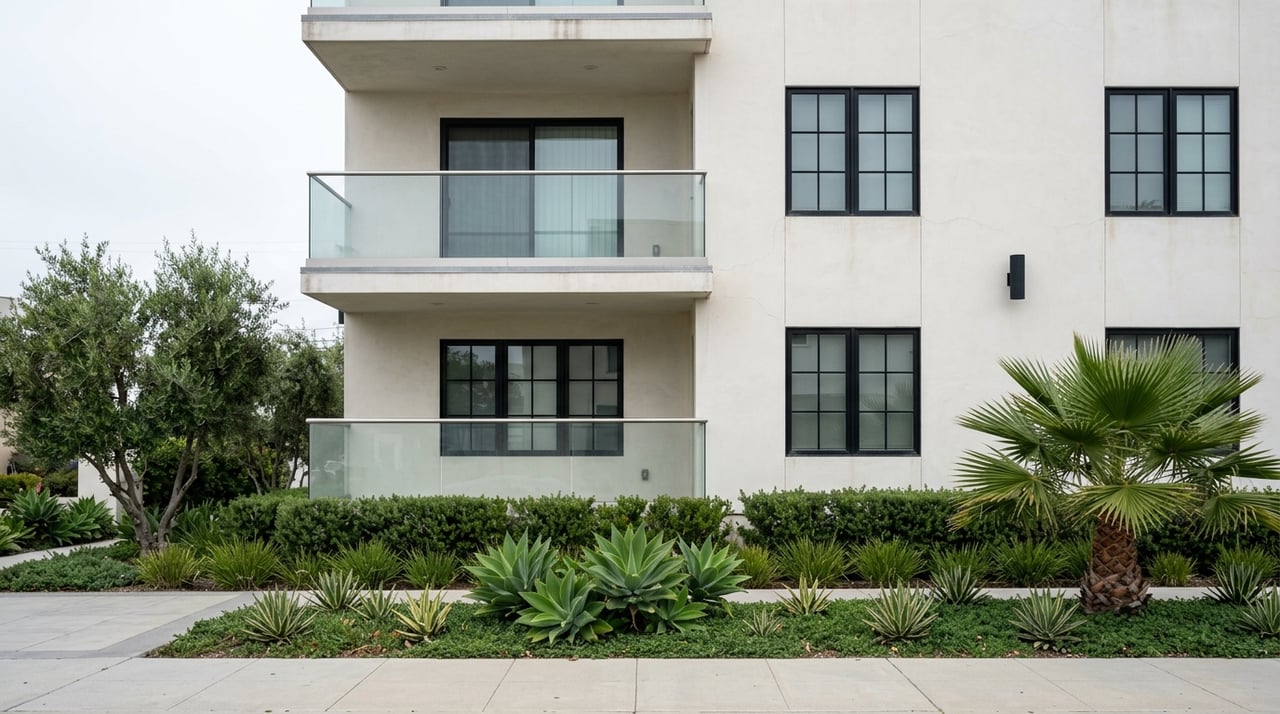
What Culver City Real Estate Trends Mean for Buyers
If you’ve been watching Westside home prices and wondering whether Culver City is still worth a serious look, the short answer is yes. This market is still competitive, still expensive, and still moving faster than many buyers expect. The good news is that Culver City is not just one market, and that creates real opportunities if you know where and how to look. Let’s dive in.
Culver City continues to act like a seller-leaning market, even though different data sources show slightly different numbers. In March 2026, Redfin reported a median sale price of $1.45 million, 37 median days on market, a 101.7% sale-to-list ratio, and an average of 3 offers per home. Zillow’s late March snapshot put the typical home value at $1.30 million, with 86 homes for sale and 22 days to pending.
Realtor.com’s April 2026 summary adds another useful angle. It showed a median listing price of about $999,700, a median sold price of $1.425 million, 147 homes for sale, 42 median days on market, and a 101% sale-to-list ratio. While the exact figures vary, the broader message is consistent: buyers are not shopping in a soft market here.
If you’ve compared market reports and felt confused, you’re not alone. Each platform tracks a different slice of activity, so one may focus more on closed sales while another emphasizes active listings or estimated values. That means the best way to read Culver City data is by looking for the common pattern, not expecting every source to match exactly.
That common pattern is clear. Culver City remains a high-priced, fast-moving Westside market where strong homes can still attract quick interest. For buyers, that means preparation matters. For sellers, it means strategy still matters just as much as demand.
One of the biggest mistakes buyers make is treating Culver City like a single, uniform market. In reality, condos, townhomes, and single-family homes are behaving differently. Your experience will depend heavily on the type of home you want.
Zillow’s current search pages show 52 condo listings, 22 single-family listings, and just 6 townhomes. That inventory mix matters because a condo buyer has far more choices right now than a townhome buyer. A detached-home buyer, on the other hand, is shopping in a smaller and much higher-priced pool.
Condos are currently the deepest active segment in Culver City. Many active one- and two-bedroom units sit roughly between $420,000 and $825,000, while larger or more favorably located options can reach about $999,000 to $1.35 million. That gives buyers a wider range of entry points than they’ll find in the detached-home market.
Several condo listings also show price cuts. That is an important signal, because it suggests buyers may have more room to negotiate in some parts of the attached-home market. If you want to enter Culver City with a lower price point and more options, condos deserve close attention.
Detached homes are a different story. Current active examples range from about $1.095 million for a new-construction home to $5.25 million for a larger new build, with several listings in the $1.3 million to $2.0 million range. That spread reflects both the city’s broad appeal and the fact that house-by-house differences can be significant.
For many Westside buyers, Culver City offers a detached-home alternative to nearby areas at the top of the price ladder. Even so, buyers should expect stronger competition and less flexibility in the most appealing house segments. If you’re targeting a single-family home, timing and clear priorities matter.
Townhomes are currently the smallest active category, with only 6 listings shown and prices spanning roughly $629,000 to $1.95 million. In a market this thin, one or two new listings can materially change your options. That can be frustrating, but it can also create openings for buyers who stay ready.
Townhomes often appeal to buyers who want more space than a condo without taking on the full maintenance of a detached house. In Culver City, that middle ground exists, but it is limited. If this is your target property type, you’ll likely need to move quickly when the right fit appears.
A citywide headline rarely tells the full story here. Zillow shows neighborhood median home values ranging from about $649,606 in Jefferson to about $1,958,917 in Blair Hills. Nearby zip codes also vary sharply, with 90230 at $1,096,295 and 90232 at $1,737,086.
That gap is one of the most important trends Westside buyers should understand. When someone says Culver City is expensive, that may be true in general, but it does not mean every pocket offers the same value, inventory, or pricing pressure. In practice, buyers need to compare exact areas, not just the city name on the map.
Culver City’s demand is not happening by accident. Official city materials describe a compact 5-square-mile city with 57,952 jobs in 2019 and a growing high-tech and creative economy. The city identifies major employers and developments tied to Sony, Apple, Amazon Prime, HBO, and TikTok, while city reporting also notes continued expansion by Apple and Amazon and the long-standing importance of Sony Pictures Entertainment.
Downtown Culver City’s studio concentration adds to that draw. Local business materials describe the downtown area as book-ended by Sony Studios, The Culver Studios, and Amazon MGM Studios. For buyers who want easier access to Westside job centers, that employer base helps explain why demand remains durable.
Commute patterns and daily mobility also support the market. Redfin gives Culver City a Walk Score of 76, a Transit Score of 48, and a Bike Score of 71. City transit materials also list Culver CityBus, the LA Metro E Line, Metro Bus, Santa Monica Big Blue Bus, and LADOT fixed routes as part of the transportation network.
For many buyers, that adds practical value beyond the home itself. Culver City can work well as a car-light base for daily errands, commuting, and getting around the Westside. In a region where convenience often carries a premium, that helps support pricing.
One longer-term trend worth watching is future housing supply. The City of Culver City has reported 36 active residential projects totaling 4,272 units, including 612 affordable units. That total exceeds the city’s Regional Housing Needs Allocation obligation of 3,341 units through 2029.
This does not mean buyers should expect a sudden flood of new inventory right away. Development takes time, and new units do not hit the market all at once. Still, it does suggest that supply could broaden gradually over the next several years, which may create more options and slightly different negotiating conditions in some segments.
For Westside buyers trying to balance budget and location, Culver City often lands in a useful middle ground. Redfin’s March 2026 data showed a median sale price of $1.45 million in Culver City, compared with $1.6 million in Santa Monica and $1.9 million in Venice Beach. That does not make Culver City inexpensive, but it does help explain why buyers keep looking here.
You may find that Culver City offers a different value equation, especially if your search includes detached homes or larger attached properties. The key is to compare the exact micro-location and property type, not just broad city medians. A home in one zip code or neighborhood can tell a very different story from a home a short distance away.
If you’re planning to buy in Culver City, the smartest move is to shop with a more precise lens. Instead of asking whether Culver City is hot or soft, ask which segment is giving you the best opportunity. That usually means narrowing your search by property type, budget band, and micro-location first.
Here are a few practical takeaways:
Culver City is still one of the Westside markets where preparation pays off. If you understand that it behaves like several smaller markets at once, you can make sharper decisions and avoid overgeneralizing what the numbers really mean.
Whether you’re comparing condos, looking for a detached home, or trying to understand which part of Culver City best fits your goals, local guidance can make the process much clearer. If you want a tailored read on the Culver City market and how it compares with the rest of the Westside, connect with Stacy Young.
Stay up to date on the latest real estate trends.

Get assistance in determining current property value, crafting a competitive offer, writing and negotiating a contract, and much more. Contact me today.