The Santa Monica Rent Roll Problem: Why One Vacant Unit Can Be Worth $400,000 More Than An Occupied One
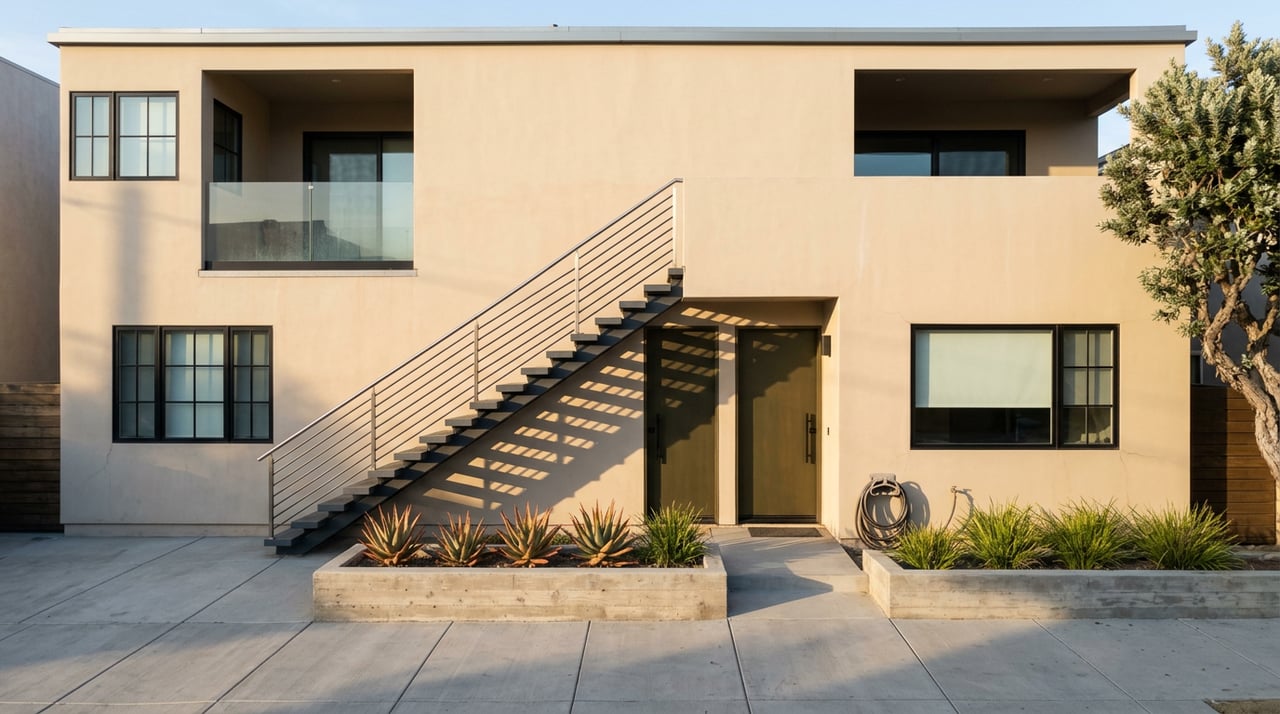
Two duplexes sit three doors apart on the same Ocean Park block. Same lot size, same 1962 construction, same amount of deferred maintenance on the roofline. One is listed several hundred thousand dollars above the other. The cheaper one has tenants who have lived there since the Clinton administration. The pricier one is sitting empty.
That gap is not a pricing error. It is the entire story of buying income property in Santa Monica, and it comes down to a single date that most buyers do not think to ask about until they are already in escrow.
Santa Monica's Rent Control Charter Amendment covers residential rental units in buildings that received a certificate of occupancy before April 10, 1979, as long as the property has two or more rental units. Single-family homes and condominiums are exempt from local rent control under the state's Costa-Hawkins Rental Housing Act regardless of how old they are. A pre-1979 duplex, triplex, or small apartment building sits on one side of that line. A condo built in 1965 sits on the other, because Costa-Hawkins carves out condos by property type, not by age.
That single fact, more than square footage or finish level, determines what kind of asset you are actually buying. On one side, you are purchasing a building where you can set rent freely on any unit that turns over. On the other, you are purchasing a stream of income that a tenant's Maximum Allowable Rent, set and tracked by the Santa Monica Rent Control Board, will continue to govern indefinitely, regardless of who owns the building.
Before you get attached to a listing, pull the rent roll and check the certificate of occupancy date. It costs you a phone call to the Rent Control Board. Skipping it costs you the ability to underwrite the deal correctly.
An income property with long-term tenants sounds like a selling point. In most markets, it is. In Santa Monica, it usually isn't, and the mechanism is worth understanding rather than just accepting.
Once a unit is covered under rent control, the rent a landlord can charge is capped by the unit's Maximum Allowable Rent, and annual increases are limited to the Rent Control Board's Annual General Adjustment. For the period that just ended August 31, 2026, that adjustment was 2.3%, capped at $60 a month. For the new period starting September 1, 2026, the Board set the adjustment at 2.6%, capped at $70 a month. Either way, a landlord inheriting a tenant paying well below market has no lawful path to close that gap quickly. The rent stays low until the unit turns over on its own.
Buyers underwrite around that reality. An investor evaluating a fully tenanted, rent-controlled building applies a cap-rate lens to the income that exists today, not the income the building could theoretically produce if every unit were rented at market. That is why occupied Santa Monica multi-unit properties commonly trade at offers running 15 to 25 percent below what an equivalent vacant property would command. A single vacant unit changes the buyer pool entirely, since it opens the property to owner-occupants and house-hackers alongside pure investors, and that competition alone can add well into six figures to the final sale price.
The flip side matters too. A building where current rents sit far below market can attract a premium from a specific kind of buyer: the value-add investor betting on turnover. If your target property has long-tenured residents paying decades-old rent, someone is going to price that gap as opportunity, not liability. Which kind of buyer you are, and which kind of buyer you're competing against, depends entirely on the rent roll you're looking at.
Some buyers look at a rent-controlled building and think the fix is simple: use the Ellis Act to exit the rental business, clear the units, and re-lease at market. The law does allow this. The cost and timeline rarely match what a first-time buyer expects going in.
| Tenant category | Required notice | Relocation payment |
|---|---|---|
| Standard tenancy | 120 days | Base payment, roughly $23,000 to $24,000 per unit as of early 2026 |
| Senior tenant (62 or older) | Up to one year | Base payment plus an additional $4,000 to $5,000 |
| Disabled tenant | Up to one year | Base payment plus an additional required amount |
| Household with minor children | Up to one year | Base payment plus an additional required amount |
Run that math across a ten-unit building with a mix of tenant types and total relocation costs can easily clear $250,000, before you've spent a dollar on the renovation you were planning to do with the money you saved by avoiding a premium purchase price.
The part that surprises buyers most is what happens after the withdrawal. Displaced tenants retain specific rights for ten years following an Ellis Act withdrawal. Re-rent the property within two years and the displaced tenant has a right of first refusal at their old controlled rent. Re-rent within five years and the prior Maximum Allowable Rent still controls. Re-rent within ten years and the former tenant still holds a right of first refusal, even at market rate. These obligations attach to the property itself and pass to whoever owns it next, which means the Ellis Act is not a reset button. It is a long-dated liability that a future buyer inherits if you decide to sell before the restrictions expire.
None of this makes Santa Monica multi-unit property a bad investment. It makes it a different kind of investment than the median price per square foot suggests, and the difference only shows up if you do the homework before the offer, not after.
Ask for the certificate of occupancy date and confirm whether the building falls before or after April 10, 1979. Pull the current registration and Maximum Allowable Rent history for every unit directly from the Rent Control Board rather than relying on the seller's summary. Check which units, if any, are vacant or on month-to-month terms, since that status changes your buyer competition and your financing options. If an Ellis Act strategy is part of your plan, model the full relocation cost and the multi-year re-rental restriction into your return, not just the notice period.
The Santa Monica market rewards buyers who treat the rent roll as the real product being sold, not an attachment to the listing. The building's bones matter. What matters more is which side of one date it falls on.
Does Costa-Hawkins exempt every condo in Santa Monica, even older ones? Yes. Single-family homes and condominiums are exempt from Santa Monica's local rent control under the state Costa-Hawkins Rental Housing Act regardless of the building's age. The exemption is based on property type, not construction date.
What is the current Annual General Adjustment for rent-controlled units? For the period beginning September 1, 2026, the Santa Monica Rent Control Board set the adjustment at 2.6%, with a maximum increase of $70 a month. The prior period, which ended August 31, 2026, was set at 2.3% with a $60 monthly cap.
If I buy a rent-controlled building with a vacant unit, can I rent it at market rate? Generally yes. Once a unit is vacated through a voluntary move-out rather than a no-fault eviction or buyout, state law allows the next tenancy to be set at market rent, which is then registered with the Rent Control Board as the new Maximum Allowable Rent going forward.
Does the Ellis Act let a new owner immediately return units to the rental market at market rent? No. Displaced tenants retain re-rental rights for ten years. Depending on how soon the units are re-rented, the former tenant may have a right of first refusal at their old rent, the prior Maximum Allowable Rent may still apply, or the tenant may retain a right of first refusal even at market rate. These restrictions attach to the property and transfer to future owners.
If you're weighing a duplex, triplex, or small apartment building in Santa Monica and want someone to run the actual rent-control math before you write an offer, Stacy Young has spent more than three decades reading Westside rent rolls and knows exactly which questions to ask the seller first.
Stay up to date on the latest real estate trends.



Get assistance in determining current property value, crafting a competitive offer, writing and negotiating a contract, and much more. Contact me today.