What to Know About a Venice Coastal Zone Renovation Permit
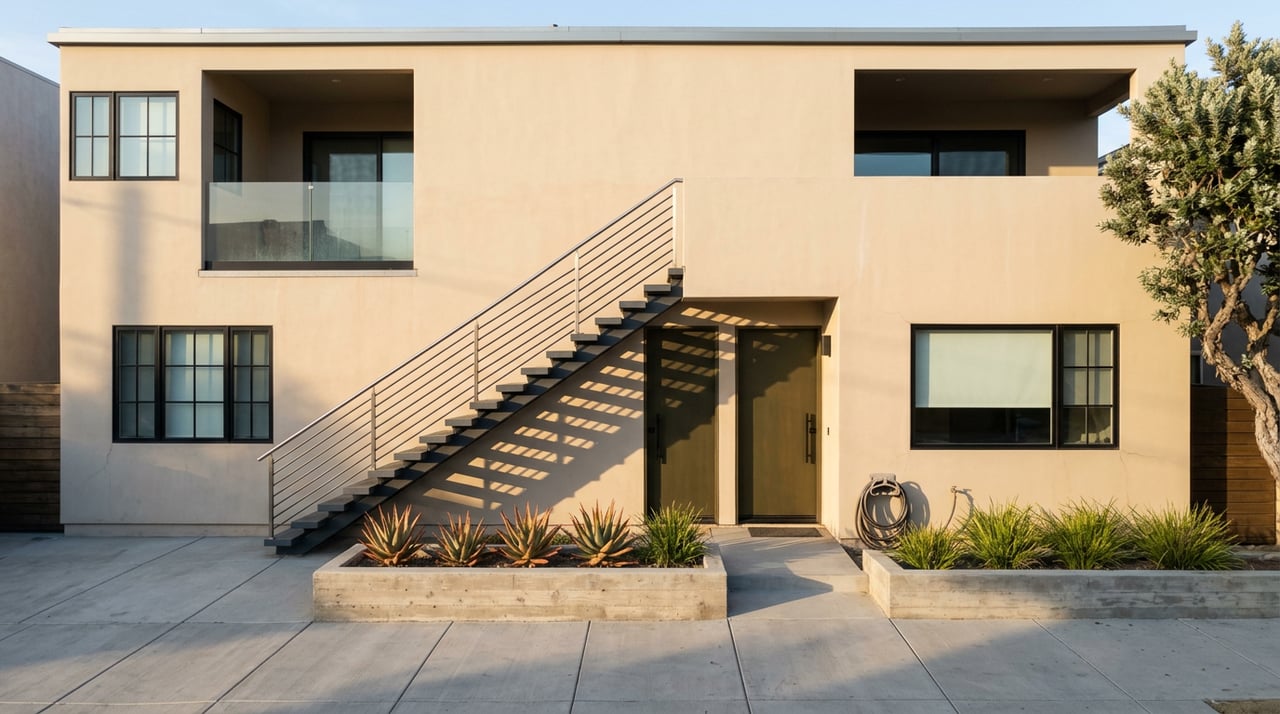
A few blocks off Rose Avenue, in Venice's Oakwood subarea, a small apartment site at 657 and 659 Sunset Avenue has spent the first months of 2026 moving through a process most Venice property owners assume ends the moment the city signs off. It didn't. The Los Angeles Department of City Planning approved a coastal development permit for the site late last year. Then neighbors filed an appeal on January 15, 2026, the final day of the appeal window. The California Coastal Commission's own staff issued a report on February 25 recommending the appeal be denied, and the Commission took the matter up at its March 11 hearing. Roughly eight weeks passed between the appeal being filed and the Commission acting on it, and that's the fast part of the process, not the slow part.
That sequence is the reason this piece exists. Most guidance on buying, selling, or renovating in Venice treats "Coastal Zone" as a single line item, something you disclose and move past. It isn't. It's a second layer of government that can reopen a project the city already approved, and in some pockets of Venice it isn't even optional. It's a required, separate permit.
The Coastal Zone that governs Venice isn't limited to homes with sand in the yard. Under state law it generally extends inland 1,000 yards from the mean high tide line, which in Venice reaches well past the boardwalk and into blocks that don't have an ocean view at all. Inside that boundary, the Venice Coastal Zone Specific Plan requires that no demolition, grading, building permit, or certificate of occupancy be issued until the Director of Planning has reviewed the project and signed off that it complies with the Specific Plan. That sign-off sits in front of the building permit, not alongside it. A contractor can't pull a permit while it's pending, no matter how routine the interior work looks on paper.
This is the detail that trips up buyers who assume "Coastal Zone" only means beachfront. If a property sits anywhere within that inland band, an addition, a second story, a new footprint, or exterior changes visible from a public way can all pull the project into review before a shovel goes in the ground.
Here is the part that catches even experienced renovators. Within what the Coastal Act calls the Dual Permit Jurisdiction area, generally the land between the first public road and the sea, a project that receives a local coastal development permit from the city must also obtain a second, separate coastal development permit directly from the California Coastal Commission. Not an appeal right. Not a review option. A second permit, from a second agency, for the same project.
For a homeowner budgeting a remodel, that means the local approval isn't the finish line. It's the first of two approvals that have to land before construction can legally start. Depending on where a parcel sits relative to that boundary, the difference between a straightforward local sign-off and a two-agency process can be a matter of which side of the street the lot is on.
The Sunset Avenue project is useful precisely because it isn't a hypothetical. The site was a one-story and two-story duplex, four units total, on a 9,415 square foot lot. The approved replacement is a four-story building, 48 feet 7.5 inches tall, 18,773 square feet, with 25 units, 19 at market rate and 6 designated very low income, and 11 on-site parking spaces. Two street trees were removed as part of the work.
Neighbors who appealed raised concerns about building height and massing relative to the surrounding blocks, about parking availability given the unit count, and about the trees being removed before the permit was finalized. Coastal Commission staff reviewed those arguments against the Chapter 3 policies of the Coastal Act and the Venice Land Use Plan, and recommended the Commission find no substantial issue, which would let the local approval stand. Whatever the outcome, the process itself is the point. A fully entitled, locally approved project in Venice can still sit in front of the Coastal Commission for months while an appeal works through staff review and a public hearing. That risk exists for a 25-unit building and for a single-family addition sitting in the same jurisdiction.
Not every project faces the same stack of review. The scope of the work and the parcel's location inside Venice determine how many layers apply.
| Type of work | What it typically triggers |
|---|---|
| Interior remodel, no change to exterior footprint | Generally exempt from coastal development permit review |
| Addition, new exterior walls, or footprint expansion | Director of Planning sign-off under the Specific Plan, often a local CDP |
| Any development in the Dual Permit Jurisdiction area | Local CDP plus a second, separate CDP from the Coastal Commission |
| New construction near the Esplanade | Height capped at 30 feet within 60 horizontal feet of the Esplanade's inland side, stepping up to a maximum of 38 feet beyond that |
| Work affecting a canal bank or drainage | Must direct all new construction drainage away from Ballona Lagoon, plus possible historic district review |
The height rule is worth sitting with for a moment. A homeowner a block or two off the boardwalk who wants a rooftop addition or a taller second story may find the ceiling on that ambition set not by their own lot's zoning but by exact horizontal distance from the Esplanade, measured in feet.
Here's the part that changes how a Venice buyer or seller should think about timing. The rules currently governing all of this, the Land Use Plan that Coastal Commission staff lean on to evaluate appeals like the Sunset Avenue case, was certified in 2001. Los Angeles City Planning does not yet have a fully certified Local Coastal Program for Venice. What exists today is that 2001 Land Use Plan, used as interim guidance, while the city works through an update process that started in 2015.
City Planning has said it is coordinating with the Coastal Commission on a draft Land Use Plan and expects to release that draft for public review in the second half of 2026. That means a property owner who buys in Venice this year and starts planning a renovation next year could be working under a materially different set of standards than the ones governing the neighborhood today. A remodel that pencils out under the current rules isn't guaranteed to pencil out the same way once the update lands. For anyone weighing a fixer with renovation potential, that's not a footnote. It's a reason to get a written determination on where a specific parcel stands before finalizing a purchase price or a listing strategy.
Two more overlays sit inside Venice's boundaries and neither one is optional to check. The Venice Canal Historic District, listed on the National Register of Historic Places in 1982, layers historic design review onto exterior work near the canal banks, on top of whatever Coastal Zone review already applies. Walk Streets, the pedestrian-only rights of way that thread through parts of Venice, carry their own standards under the Specific Plan, though some Walk Street projects can qualify for a waiver of the public hearing that a standard coastal permit would otherwise require, provided specific findings are met.
For a buyer comparing two Venice listings that look identical on paper, one on a canal and one on a Walk Street, the permitting path for future work on each can look nothing alike.
Is my parcel inside the Dual Permit Jurisdiction area? This determines whether a second, Commission-issued permit sits on top of whatever the city approves. It's worth confirming in writing before committing to a design or a purchase.
Does the work change the exterior footprint at all? Interior-only work generally avoids Specific Plan review. Anything touching massing, height, or the building envelope generally doesn't.
Is the parcel on a canal or a Walk Street? Either one adds a review layer beyond the standard Coastal Zone process, and the timelines for each differ.
Venice rewards patience with buyers and sellers who plan for the actual sequence of approvals rather than the one they assumed existed. A locally approved project here isn't always a finished project. The Land Use Plan governing every one of these decisions predates most of the homes currently listed for sale, and it's being rewritten this year. None of that is a reason to avoid Venice. It's a reason to get specific, parcel-level answers before an offer goes in or a listing goes live.
If you're weighing a Venice purchase with renovation in mind, or pricing a listing that already carries an approved permit, Stacy Young has spent three decades working through exactly this kind of Westside detail. Request a home valuation or reach out directly before you write the offer, not after.
Stay up to date on the latest real estate trends.

Get assistance in determining current property value, crafting a competitive offer, writing and negotiating a contract, and much more. Contact me today.