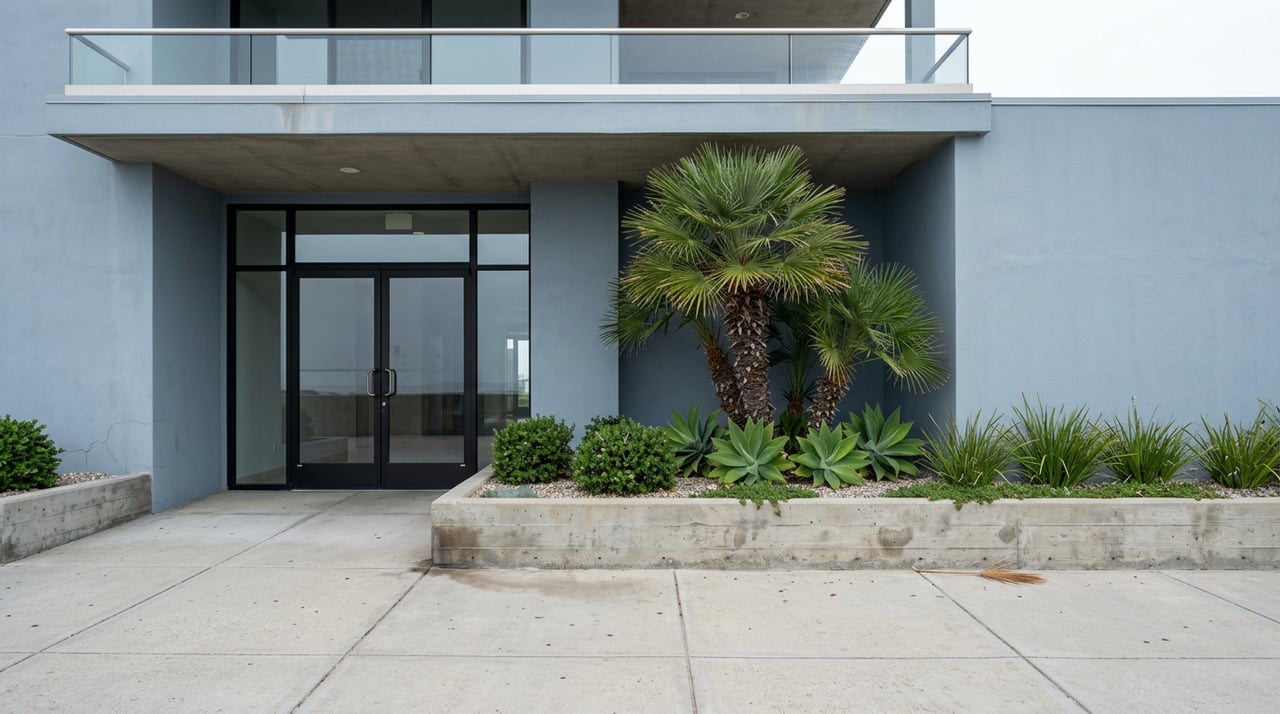
Marina del Rey Land Lease Condo Financing Timeline
Los Angeles County spent part of this year reviewing paperwork on a waterfront property that most agents would call unremarkable: a lease assignment. In a board letter approved in 2026, the county signed off on transferring the leasehold interest in Marina City Club's Parcel 125I for $24,750,000, a routine-sounding action that actually reveals something buyers rarely think about until they're deep in underwriting. The county still owns the land under a meaningful slice of Marina del Rey, and every transfer of that land has to clear a government desk before it closes.
That single fact changes the math on a category of listing that looks, on a portal photo, identical to everything else on the water.
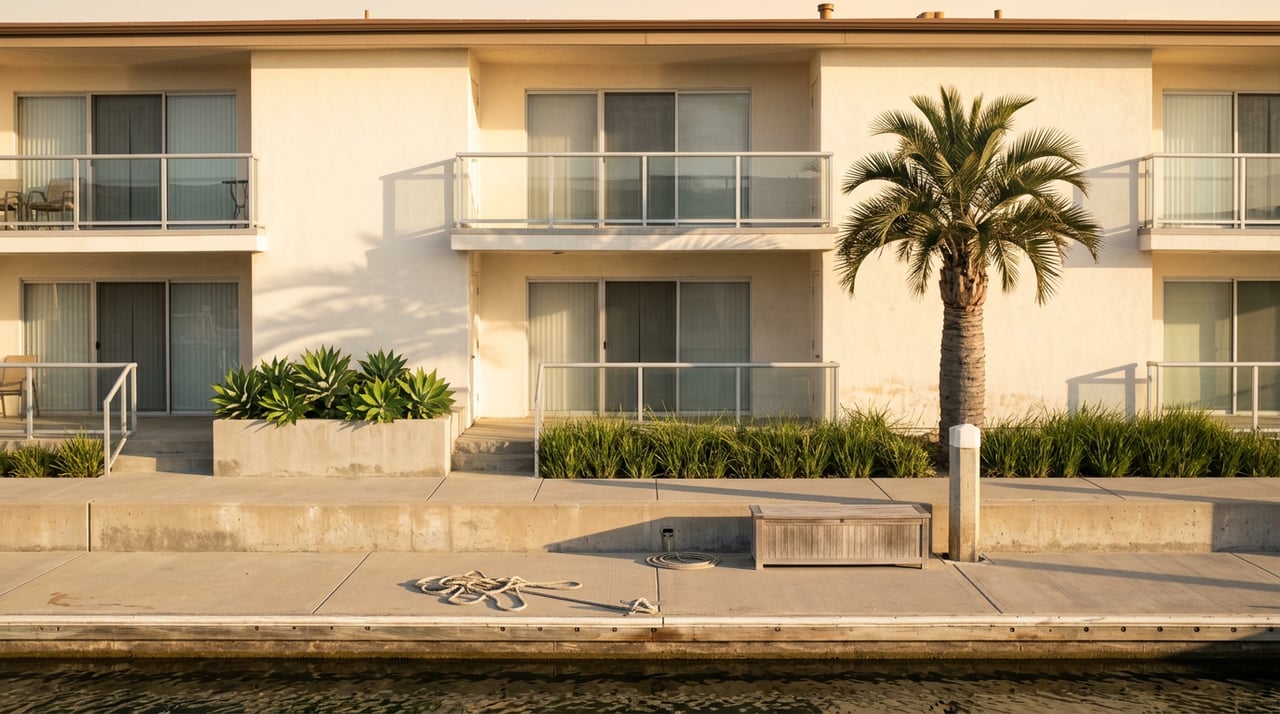
Walk the docks in Marina del Rey and you'll see towers that look interchangeable: glass balconies, boat slips, sunset views over the channel. But structurally, they split into two different asset types, and the split rarely shows up in the listing description.
Some buildings sit on land the owner controls outright, fee simple, the same ownership structure most Westside buyers already understand. Others sit on land the county still owns, leased to the building's developer or HOA decades ago under a ground lease that has an expiration date written into it. Marina City Club, the marina's first high-rise complex built between 1970 and 1978, is the clearest example of the second category. Its residential units were established as a subleasehold condominium plan in 1988, layered on top of a master ground lease with the county.
Compare that to newer full-service towers like Azzurra, Cove, and Regatta, which function more like resort properties, with valet, concierge, and rooftop amenities, and which typically sit on fee simple land. Two units a few blocks apart, similarly priced, similarly finished, can represent fundamentally different long-term positions depending on which side of that line they fall on.
The 2026 board letter isn't about a homeowner selling a condo. It concerns the leasehold interest tied to the apartment portion of Marina City Club, being reassigned from the current lessee, Essex Marina City Club, L.P., to a new entity. Before approving it, the county required the incoming party to show an equity net worth above $50 million and confirmed that its proposed management company, Coastline Real Estate Advisors, Inc., was acceptable to the county.
The board letter states plainly that "the proposed sales price of $24,750,000 for the Parcel 125I leasehold appears to be justified based on an independent analysis."
That level of scrutiny is normal for these transactions. It's a useful reminder for anyone shopping a leasehold condo nearby: the county isn't a passive landlord collecting a check. It's an active party with review authority over who holds the lease and how the property is managed, and that authority extends down to the individual unit owner's future resale, even if most buyers never see that machinery in motion.
For scale, Essex originally acquired the entire Marina City Club complex in 2004 for approximately $27.7 million, a figure that included the land lease obligation attached to the property. Two decades later, a single parcel within that same complex changed hands for nearly as much. The land under Marina del Rey's waterfront is still actively priced and traded, just not in the way a typical home listing suggests.
Here's the number that matters most and gets mentioned least: Marina City Club's ground lease with the county runs through July 29, 2067, according to both the 2026 board letter and Essex's original 2004 acquisition announcement. As of today, that's just over 40 years remaining. On paper, that sounds like more than enough runway for anyone buying now.
Run the mortgage math and the picture changes.
Somewhere around 2032, the standard 30 year financing path for this specific building starts to close, even though the lease itself still has more than three decades left. The lease's remaining years look generous. The mortgage math tells a tighter story.
This isn't unique to Marina City Club. Ground leases across Marina del Rey's older towers run anywhere from 25 to 99 years, and each one carries its own expiration date and its own version of this countdown. The lesson generalizes: don't ask how many years are left on the lease. Ask what year a standard loan on this specific unit stops qualifying, because that date arrives well before the lease does, and it's the date that actually shrinks your buyer pool at resale.
Lending guidelines shift over time and vary by lender, so anyone weighing a purchase like this should confirm the current cushion requirement directly with a loan officer rather than relying on a fixed number. The exercise itself, running the years, is what most buyers skip.
None of this makes leasehold ownership a bad decision. It makes it a different one, with a different cost structure. Owners in leasehold buildings typically pay a monthly land lease fee on top of HOA dues, roughly comparable in size to the HOA charge itself, and that fee generally isn't treated the same way as mortgage interest for tax purposes, which is worth a conversation with a tax professional before closing. Transfers commonly carry a fee in the range of 3 percent of the sale price, negotiated as part of escrow rather than fixed by statute.
Fee simple buildings skip all of that. Newer full-service towers like Azzurra, Cove, and Regatta carry higher HOA dues in exchange for bundled amenities and a simpler ownership structure that a wider range of lenders will finance without a lease-term calculation attached. Buyers who prioritize resale liquidity and financing flexibility tend to gravitate here. Buyers focused on unit price relative to square footage sometimes find leasehold buildings more approachable up front, provided they understand what that lower basis is actually pricing in.
A handful of questions separate an informed leasehold purchase from a surprise at underwriting:
Anyone weighing a leasehold unit for rental income should build in one more layer of diligence. California's Davis-Stirling Act sets a floor on how restrictive an HOA can be about leasing, generally preventing caps below 25 percent of units and allowing associations to prohibit stays under 30 days. Marina del Rey also sits in unincorporated Los Angeles County within the county's Coastal Zone, where short-term rental registration rules exist on paper but don't fully apply until they're incorporated into the local coastal program. Anyone underwriting a short-term rental strategy here should get current, building-specific confirmation before counting on that income.
A land-lease condo in Marina del Rey isn't a worse investment than its fee simple neighbor. It's a different financial instrument wearing the same finishes, and the difference doesn't show up until someone runs the years against the mortgage terms. The county's own lease agreement files are public record for exactly this reason. Read them before you fall in love with the view.
If you're looking at a specific building in Marina del Rey and want someone to pull the lease, run the financing math, and tell you plainly what you're actually buying, Stacy Young has spent more than three decades working these Westside waterfront blocks. Request Your Free Home Valuation and let's talk through what the fine print means for your specific unit before you write an offer.
Does LA County ever renew or extend a ground lease before it expires? Renewal terms vary by lease and aren't guaranteed. Some agreements include renewal options with specific conditions, others don't. The only reliable answer comes from reading the actual lease document for the building in question.
Are all Marina del Rey waterfront buildings on leased land? No. Marina del Rey includes a mix of fee simple and leasehold properties. Several large towers built in the 1970s and 1980s sit on county-controlled ground leases, while other buildings, including newer full-service developments, are fee simple.
Can a leasehold condo in Marina del Rey qualify for standard financing? Often yes, provided the remaining lease term clears the lender's required cushion beyond the loan's maturity date. That calculation depends on the specific lease expiration and the loan term requested, which is why confirming it with a lender early in the process matters more than the sale price alone.
Stay up to date on the latest real estate trends.

Get assistance in determining current property value, crafting a competitive offer, writing and negotiating a contract, and much more. Contact me today.